What Makes a Real Pizza

(Part 1): Fusion Within Diverse Cultures
Anyone familiar with the history of pizza may ask me curiously: “What makes a real pizza?”
This is an excellent question, and also a highly philosophical one about food.
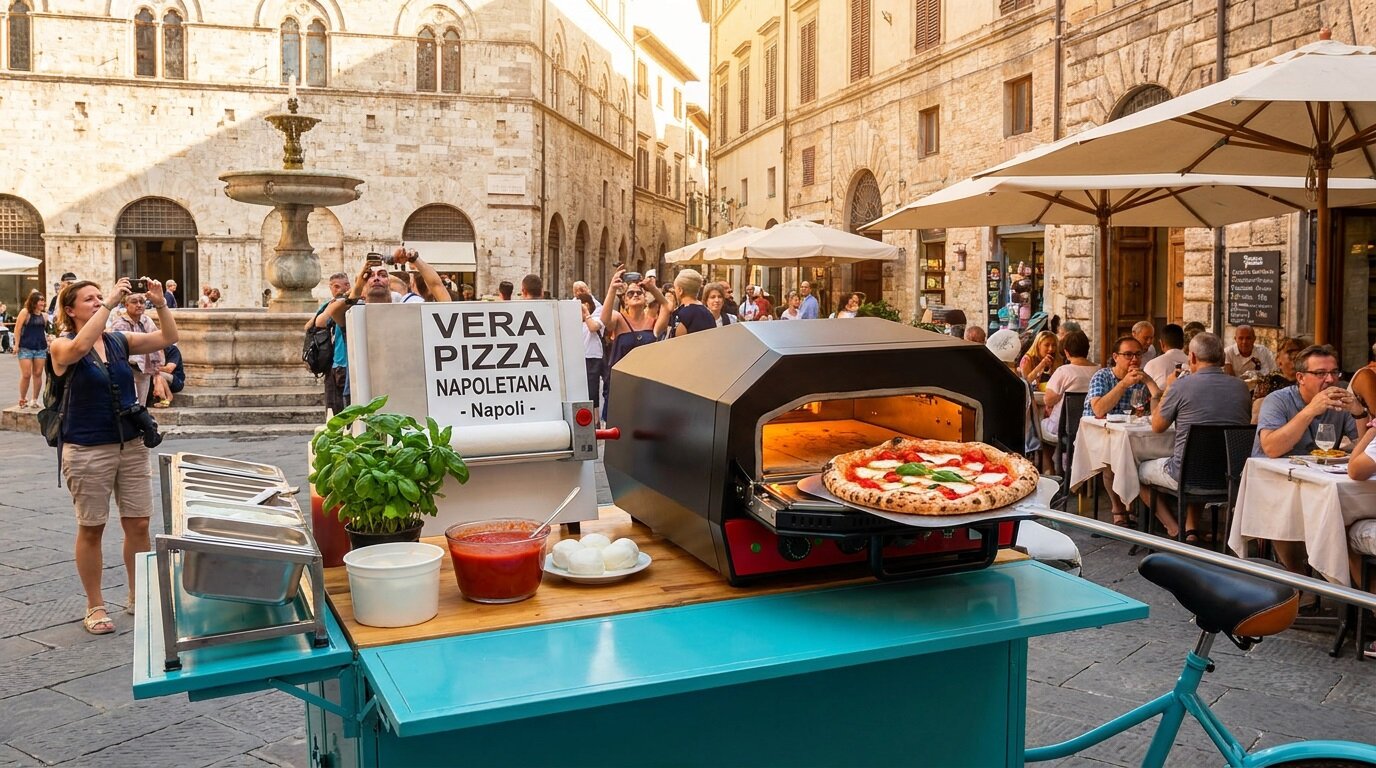
If you put this question to a Neapolitan in Italy, they will answer without hesitation: there must be no olive oil in the dough for a genuine pizza! It has to be baked in a high‑temperature wood‑fired oven! And there is only one cheese allowed on pizza, and that is mozzarella di bufala (water‑buffalo mozzarella).
What do other Italians think?
They will tell you every single ingredient in the pizza has to be 100% produced in Italy; otherwise it cannot be a real pizza!
For the French, pizza with Emmental (hole‑riddled Swiss‑style cheese) is authentic.
Americans demand generous toppings!
Generous crust, generous tomato sauce base, generous cheese!
So does the question “what makes a real pizza” simply come down to personal opinion with no universal standard?
That conclusion would be far too hasty.
It is easy to see that all the viewpoints above are given by specific countries or regions, shaped by their local pizza history, culture and perception. They remain subjective and one‑sided, lacking dialectical analysis and summary.
There is an old Chinese saying: “Read ten thousand books and travel ten thousand miles.” I have been fortunate enough to travel across different European countries and have lived and worked in China for many years. This experience grants me a broader vision and a multicultural perspective to look at things. I keep exploring and reflecting, hoping to work out a comprehensive, professional answer that holds true across the world.
What Makes a Real Pizza (Part 2): The Craftsman’s Spirit
“Craftsman’s spirit” has been a popular phrase in China recently. In my opinion, it perfectly describes the mindset of an outstanding pizzaiolo.
As the saying goes, “Human effort accomplishes things.” A genuine pizza must be made by a genuine pizzaiolo. Once we understand what a genuine pizzaiolo is, the answer to what constitutes a real pizza will grow clearer.
There are plenty of self‑proclaimed pizzaiolos on the market. They merely know how to assemble a pizza, and do not deserve the title of “master”. To my mind, truly respected pizzaiolos are few and far between.
My old master once told me we must keep pace with the times. Interpreting this for the pizza industry: on one hand, pre‑made semi‑finished products and automated equipment have to some extent lowered the technical barrier for pizzaiolos. On the other hand, as pizza culture spreads widely, many innovative flavours and preparation methods have emerged.
I believe that to avoid getting lost amid these rapid‑fire changes, an excellent pizzaiolo ought to abide by “the fundamental code for pizzaiolos”. Whichever ingredients you select, whichever cooking technique you adopt, you need to “know not only what you are doing, but also why you are doing it”. This means understanding at a fundamental level why an ingredient is chosen, its properties, correct dosage, pairing principles, cooking process and final outcome.
Many beginners only follow recipes or their instructor’s routine and repeat mechanically without grasping the reasoning behind them. One of my former junior apprentices once said to me: “I use imported Italian Double‑Zero (00) flour, so my pizza is authentic.” I asked him in reply: “Is that really so? What are the properties of Double‑Zero flour? How is it different from other flours? What exactly do you mean by an ‘authentic pizza’?” Left speechless by my questions, he humbly set out to learn more. Now he has become an outstanding pizzaiolo running three shops and winning awards at multiple competitions.
Therefore in my view, merely being able to make pizza does not make you a pizzaiolo. Only by retaining that humble, inquisitive mindset of “knowing what and why” can one grow into a genuine pizzaiolo.
What Makes a Real Pizza (Part 3): Cone Pizza
The second element within the Pizzaiolo’s Fundamental Code lies in passion and reverence for the profession, as well as respect for diners.
Whether you are preparing pizza for family and friends at home or you work professionally in the pizza trade, you should approach the food you serve guests with reverence, crafting tasty, wholesome dishes with careful thought and preparation. Only with heartfelt passion and respect can you create genuinely remarkable, delicious pizza.
When I was in my early twenties, I once presumptuously believed my pizzas were the best in the whole world. Back then in the south of France, there was indeed nobody locally making better pizza than I did.
However, after I joined the French Pizzaiolo Association as a member and met more and more world‑class master pizzaiolos, I changed my mind. I realised there is always someone better out there; my journey of learning still stretched far ahead. I reset my attitude, and in time became a genuine pizzaiolo myself.
Now I would like to lay out what I consider the necessary and sufficient conditions for a “real pizza”, to help people judge whether a pizza qualifies as authentic.
For instance, there are certain limits regarding pizza shape. A few years ago in China I encountered a curious product known as “cone pizza”. It held cheese, tomato sauce and other fillings stacked inside an ice‑cream‑cone‑style wafer. This novelty sparked a brief fad before vanishing quickly from the marketplace. Is cone pizza actually pizza? Furthermore: if you place cheese and tomato sauce on top of flat dough and cook it on a frying pan, is that pizza?
What Makes a Real Pizza (Part 4): The Definition of Pizza
The pizza industry is expanding rapidly all over the globe. Traditional pizza keeps evolving, yet evolution has its boundaries. We need to preserve its core essence, so we can identify what counts as genuine pizza, rather than losing its identity and turning it into pies, cakes, flatbreads or griddle cakes.
Drawing from my years‑long professional practice, reflection, and exchanges with master pizzaiolos across the world, I have formulated the following necessary and sufficient conditions defining what constitutes a real pizza:
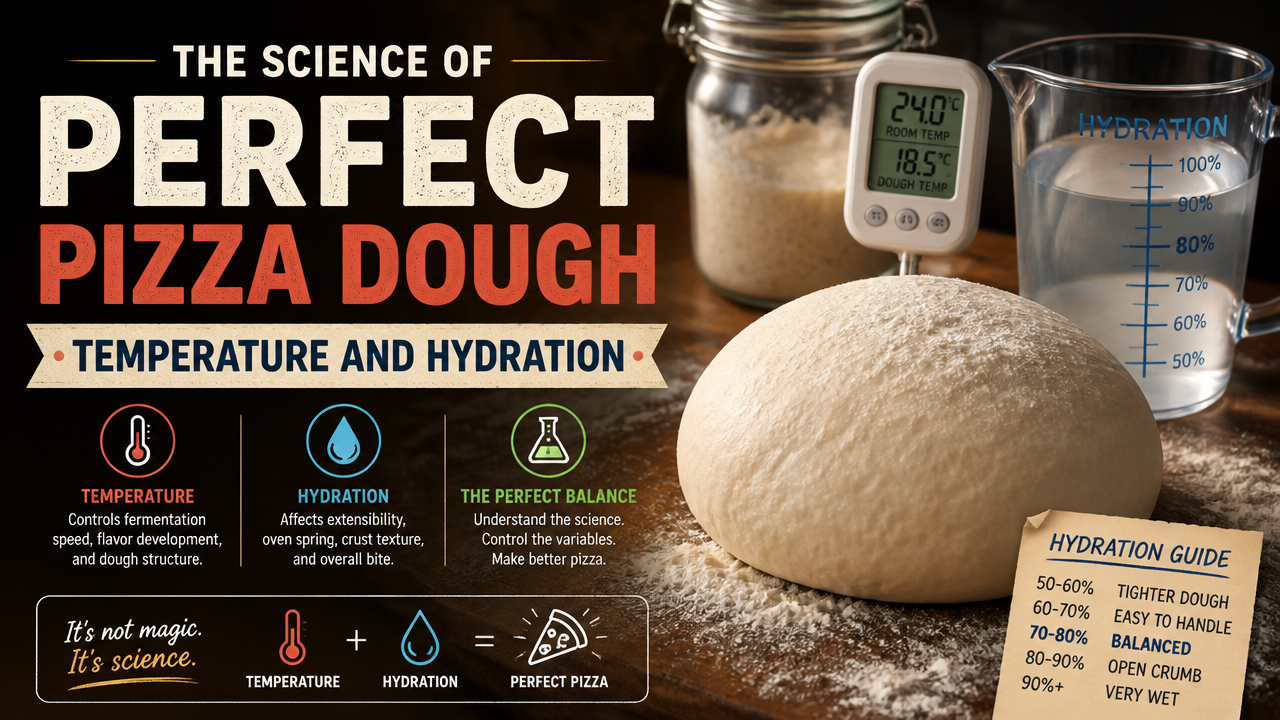
Necessary condition: Dough made from wheat flour following the fermentation methods and workflow of traditional handmade Italian pizza.
Sufficient condition: Baked at high temperature inside a traditional oven directly on the oven stone; sauce and toppings thoughtfully combined for balanced, harmonious flavour.
Sufficient condition: Round‑shaped, incorporating cheese and tomato.
Sufficient condition: All ingredients are fresh and high‑quality.
A real pizza satisfies at least the above‑stated necessary condition, plus any two of the sufficient conditions. Speaking as a rigorous pizzaiolo, I would add: this definition describes “the real pizza” at the current stage of its historical development. That does not rule out the possibility that these criteria may be revised and adjusted in the future.